
Why Misunderstanding the Colossians 2:16 Meaning Keeps Believers in Legalistic Anxiety
Unpacking the historical evidence behind the Colossian heresy reveals a dangerous syncretic cult, not a simple Pharisaic debate about animal offerings.

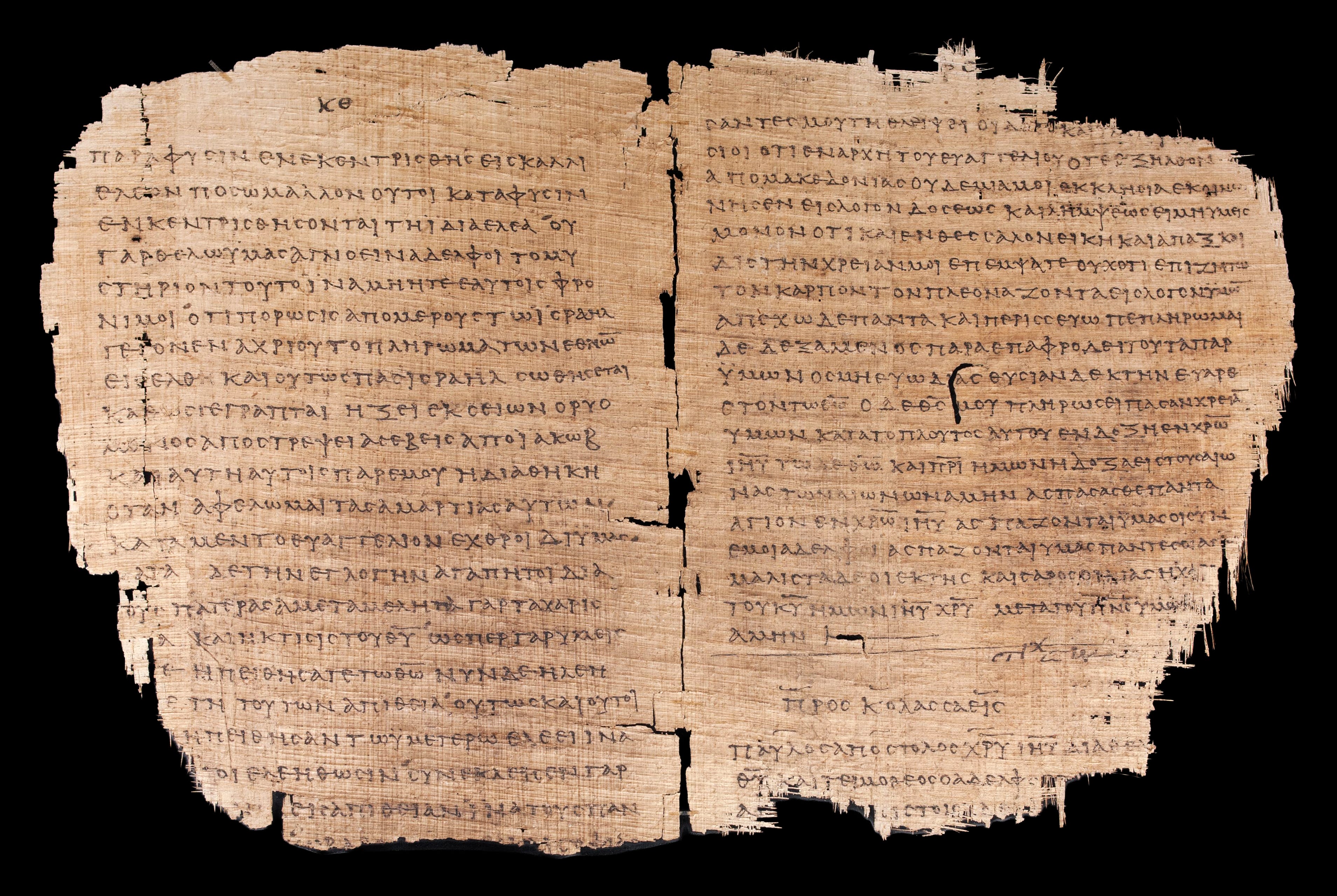
The modern legalistic interpretation of Colossians 2:16 completely misses the historical mark. Paul wasn't fighting standard Jewish Pharisees over animal sacrifices; he was battling a Phrygian cult obsessed with angel worship and severe physical asceticism. By erasing our cosmic certificate of debt, Christ permanently nullified the need to rigidly observe man-made dietary restrictions and feast days. If you are still dividing the Old Testament into "moral" and "ceremonial" categories to justify strict Sabbath keeping today, you are relying on a 13th-century invention rather than biblical theology.
Introduction
Every year, modern legalistic movements drag believers back into theological bondage by misrepresenting the Colossians 2:16 meaning. They claim that when the Apostle Paul wrote, “Therefore do not let anyone judge you with respect to food or drink, or in the matter of a feast, new moon, or Sabbath days,”[^1] he was only abolishing the ancient system of animal sacrifice. This fundamental misunderstanding attempts to force modern Christians back under the crushing weight of Torah observance, insisting that dietary laws, feast days, and strict Sabbath keeping are still mandated for the faithful today.
The stakes here are incredibly high. When we strip Scripture of its first-century context, we accidentally trade the total freedom of Christ’s finished work for a heavy yoke of religious performance. By examining the linguistic roots, the historical reality of the Phrygian region, and Paul’s brilliant legal metaphors, we can permanently dismantle these claims. It is time to look at what the text actually says about our freedom, the bizarre cult infiltrating the early church, and the cosmic debt that was nailed to the cross.
The “Animal Sacrifice” Myth and the Colossians 2:16 Meaning
One of the most persistent claims made by modern proponents of strict law-keeping is that the “judging” mentioned in Colossians 2:16 was done by Jewish Pharisees demanding animal sacrifices. To support this, they point to Ezekiel 45:17, which states it is the duty of the prince to provide burnt offerings, grain offerings, and drink offerings at festivals, new moons, and Sabbaths.[^2] They argue that Paul was only telling Christians they no longer needed to perform these specific temple sacrifices, but that eating kosher and keeping the Sabbath remained mandatory.
The linguistic and historical evidence completely shatters this claim. When Paul speaks of “meat” and “drink,” he is not referring to the sacrificial system. The Greek word used for meat, brosis (βρῶσιν), originally refers to the literal act of eating, but is also commonly used to denote that which is eaten. The word is always used by Paul in its original, literal sense of consumption, not ritual slaughter.[^3]
Furthermore, the Mosaic Law contained very few provisions concerning drinks, save for specific instances like Nazarite vows or rules for priests. Because of this, scholars note it is highly probable that the false teachers in Colossae had extended these prohibitions on wine to all Christians, similar to how the Essene sect abjured both wine and animal food entirely.[^4] The conflict wasn’t about the altar in Jerusalem; it was about the food on the believers’ tables.
Beyond the Pharisees: Identifying the True Colossian Heresy
If the opponents in Colossae weren’t standard Pharisees demanding animal sacrifices, who were they? The biblical text itself provides a clear profile of the true Colossian heresy. Paul explicitly warns the church: “Let no one who delights in false humility and the worship of angels pass judgment on you” and notes that these critics demand, “Do not handle! Do not taste! Do not touch!”.[^5]
This bizarre combination of asceticism and angel worship proves we are not dealing with the same straightforward Judaism that the Galatian churches faced. Standard Pharisees vehemently rejected the worship of angels, believing Yahweh alone was the Creator. Instead, scholars identify this teaching as a Phrygian development—a local variety of Judaism fused with non-Jewish philosophy and an early, simple form of Gnosticism.[^6]
The synagogues in Phrygia were heavily exposed to the influences of Hellenistic speculation, leading to radical religious syncretism.[^7] In this localized false teaching, a special place was given to angels as active agents in both creation and the giving of the law. Paul was not writing to dismantle orthodox Judaism; he was rescuing the church from an ad-hoc, makeshift remix of belief systems that demanded severe, unsparing treatment of the body to achieve spiritual enlightenment.
Erasing the Colossians 2:14 Certificate of Debt
To understand why believers are entirely free from these rigid dietary and calendar regulations, we must look at the immediate context preceding verse 16. In an incredibly powerful legal metaphor, Paul explains that God has made us alive with Christ, “having forgiven all your transgressions” by destroying “what was against us, a certificate of indebtedness expressed in decrees opposed to us”. He took it away by nailing it to the cross.[^8]
The Greek term Paul uses here is cheirographon (χειρόγραφον). This word, occurring only here in the entire New Testament, is drawn directly from the legal sphere, not abstract moral accounting. It denotes a handwritten document acknowledging a personal obligation—a literal receipt or bond of indebtedness. Extra-biblical Jewish texts, such as the Testament of Job 11:11, confirm this exact juridical sense, where the cheirographon functions explicitly as a certificate of debt.[^9]
Paul’s metaphor likely adapts Second Temple apocalyptic literature, which developed the idea of multiple heavenly books recording human deeds in anticipation of a final judgment.[^10] By declaring that God erased this Colossians 2:14 certificate of debt, Paul is stating that the decisive, objective accusatory record against humanity has been permanently canceled. Because this legally enforceable instrument of condemnation was nailed to the cross, no human teacher has the authority to judge a believer based on what they eat or drink.
The distinction between "moral" and "ceremonial" law isn't a biblical mandate; it’s a 13th-century study tool that accidentally became theology. You cannot bind believers to the Sabbath by artificially slicing up the Torah.
The Ezekiel Objection and What is the Sabbath in Colossians?
Opponents of this view argue that because Ezekiel 45:17 explicitly ties feast days, new moons, and Sabbaths to the duties of the prince for the house of Israel, these days remain permanently holy. They insist that while Christ may have died for the “ceremonial” law of animal sacrifice, the “moral” law of Sabbath keeping has not passed away, and we cannot break it today.
This argument relies on an artificial distinction that does not exist in the biblical text. The Bible nowhere distinguishes between the so-called “moral” and “ceremonial” laws; this categorization was not made by theologians before the 13th century A.D.[^11]
Furthermore, the New Testament entirely upends the premise that the Sabbath remains a binding mandate for Christians. The Sabbath command is the singular commandment out of the original Ten Commandments that is never repeated or reinforced in the New Testament. Instead, following Christ’s resurrection on Sunday, the early believers shifted their gatherings to Sundays. As theologian Norman L. Geisler notes, Christ disarmed the demonic powers that inspire legalistic rules about foods and festivals, completely delivering believers from the Law’s legalistic requirements.[^12]
Conclusion
When we remove our modern legalistic lenses and look closely at the text, the truth of Colossians 2:16 is remarkably clear. Paul was not offering a narrow critique of Pharisaic animal sacrifices; he was thoroughly dismantling a dangerous, syncretic Phrygian cult that weaponized asceticism and angel worship to enslave believers.
Understanding this matters today because the temptation to measure our spiritual worth through outward regulations—what we handle, taste, and touch—remains a potent distraction. We do not need to subject ourselves to an unpayable certificate of debt, because the ultimate receipt was already nailed to the cross.
“You cannot pay the debt of the law, but the good news of Colossians is that the receipt of your condemnation is already nailed to the cross.”
Footnotes
[^1]: Colossians 2:16 (NET).
[^2]: Ezekiel 45:17 (NET).
[^3]: Marvin Richardson Vincent, Word Studies in the New Testament, vol. 2 (New York: Charles Scribner’s Sons, 1887).
[^4]: Marvin Richardson Vincent, Word Studies in the New Testament, vol. 3 (New York: Charles Scribner’s Sons, 1887).
[^5]: Colossians 2:18–23 (NET).
[^6]: Peter T. O’Brien, as cited in excerpts regarding the nature of the false teachers in Colossae, referencing Matthew Black and F. F. Bruce.
[^7]: Excerpt on Phrygian synagogues, Hellenistic speculation, and angel worship.
[^8]: Colossians 2:13–14 (NET).
[^9]: Textual analysis of cheirographon, citing Testament of Job 11:11.
[^10]: Excerpt regarding Second Temple apocalyptic literature and heavenly books.
[^11]: Norman L. Geisler, “Colossians,” in The Bible Knowledge Commentary: An Exposition of the Scriptures, ed. J. F. Walvoord and R. B. Zuck, vol. 2 (Wheaton, IL: Victor Books, 1985), 678.
[^12]: Geisler, “Colossians,” 678.