
The Digital Cult Leader in Your Algorithm: Lessons from Eligio Bishop
Evaluating the rise of Carbon Nation through the lens of charismatic authority, the digital attention economy, and the biblical "test of the spirits."

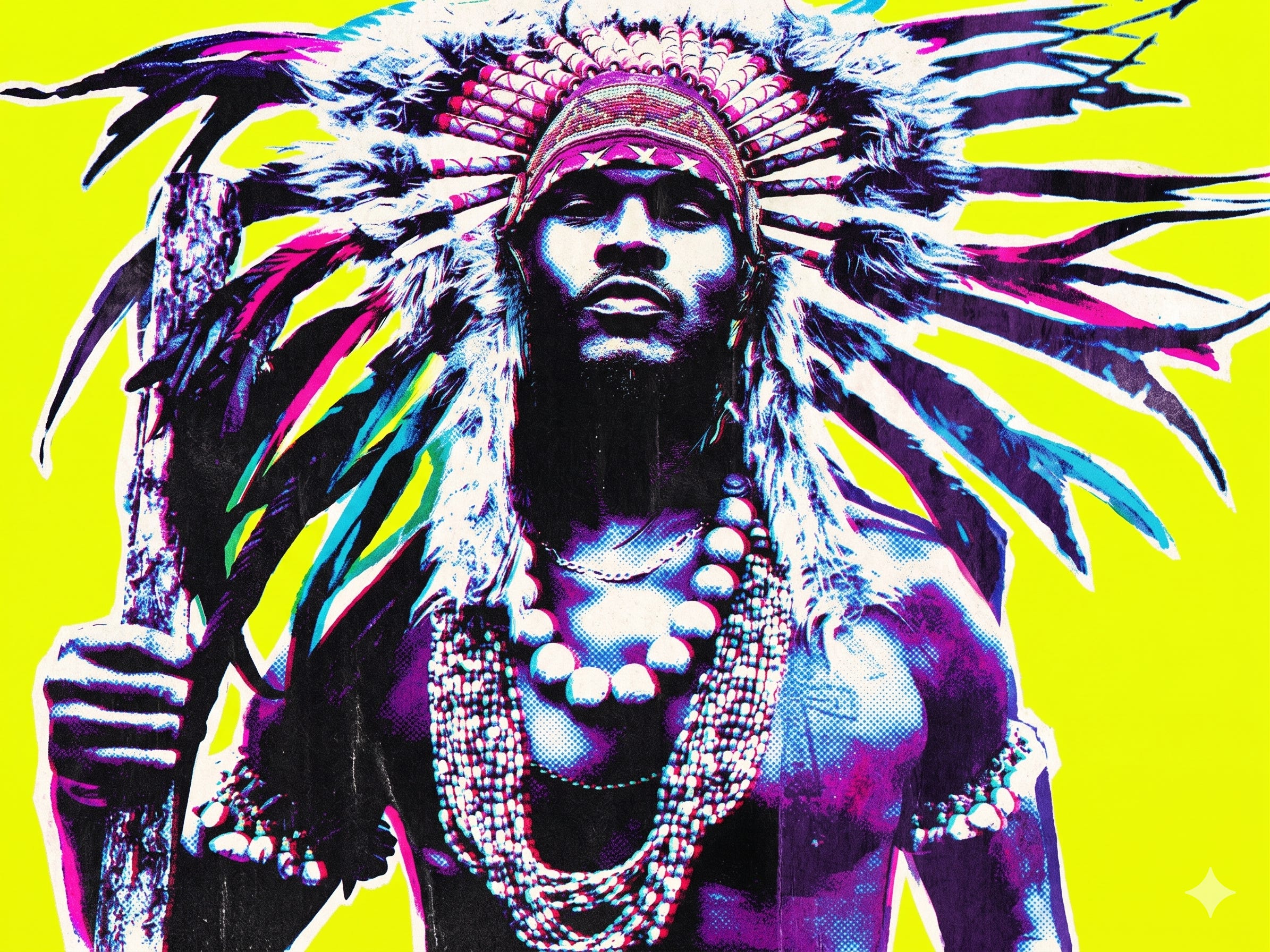
Eligio Bishop’s Carbon Nation represents a dangerous synthesis of ancient heresies and modern digital networking. By weaponizing charismatic authority and the "return to nature" narrative, Bishop created a system of total control that resulted in severe criminal abuse. For those seeking a Christian perspective on Eligio Bishop, the biblical "fruit test" provides the ultimate diagnostic for identifying wolves in sheep’s clothing.
INTRODUCTION
The digital landscape has fundamentally altered the architecture of faith, allowing “spiritual influencers” to bypass traditional institutional vetting. For those seeking a Christian perspective on Eligio Bishop, the story of Carbon Nation is not merely a tabloid true-crime saga, but a sobering case study in what the Apostle Peter called “destructive heresies.” Bishop, known as “Nature Boy,” utilized the “networked religion” of the 21st century to recruit followers into a community that promised a “Black utopia” but delivered a regime of coercion and abuse.
The Bible warns that false prophets will arise among the people, secretly bringing in views that deny the very Master who bought them. In the case of Carbon Nation, the transition from an off-the-grid “return to nature” community to a coercive cult led by a self-proclaimed deity is a textbook example of how charismatic deception functions. Understanding this movement requires us to look beyond the viral videos and examine the underlying theological and sociological mechanisms of “wolves in sheep’s clothing.”
Charismatic Authority and the Rise of False Prophets Today
The primary engine behind Carbon Nation was Eligio Bishop’s personal magnetism, a phenomenon sociologists call charismatic authority. As defined by Max Weber, this type of power is distinct from legal or traditional norms; it rests solely on the perceived extraordinary qualities of an individual leader.¹ Bishop harnessed this appeal starting in 2016, positioning himself as a spiritual guide who could lead his followers back to a purer state of existence.²
From a biblical standpoint, this is the classic “sheep’s clothing” mentioned in the Gospel of Matthew. False prophets rarely appear as monsters initially; they appear as “ministers of righteousness” or visionary leaders who address deep social dissatisfactions. In Bishop’s case, he declared himself God and used his position to demand absolute loyalty, a move that the Bible identifies as “denying the Master” while bringing upon oneself “swift destruction.”³
The Rise of Digital Religion and the Cultic Milieu
The success of Carbon Nation cannot be understood without acknowledging the shift toward digital religion. Today’s religious experience is increasingly “networked,” characterized by decentralized power structures and flattened traditional hierarchies.⁴ This environment allows figures like Bishop to act as “algorithmic authorities,” using social media to bypass the “gatekeepers” of traditional denominations and reach vulnerable individuals directly.
This “networked personal religion” creates a “bounded choice” for the follower.⁵ Within the digital echo chamber of Carbon Nation, Bishop’s word became the sole source of truth. As he promoted his “Nature Boy” persona across platforms, he tapped into a “culture of conspiracy” and a “cultic milieu” that predisposes individuals to reject mainstream society in favor of alternative, often dangerous, narratives.⁶ This digital isolation is exactly what the Apostle Paul warned against when he urged believers to “watch out for those who cause divisions... contrary to the doctrine that you have been taught.”⁷
Biblical Discernment: Knowing Them by Their Fruit
The ultimate metric for any spiritual movement, according to Christ, is not its popularity or its “smooth talk,” but its “fruit.”⁸ Every healthy tree bears good fruit, but a diseased tree bears bad fruit. The “fruit” of Carbon Nation was undeniably diseased. In 2024, Bishop was convicted of rape, false imprisonment, and revenge porn and sentenced to life in prison.⁹
This tragic outcome is the physical manifestation of what Romans describes as serving one’s “own appetites” through “flattery” and “deceit.”¹⁰ A Christian perspective on Eligio Bishop must emphasize that true spiritual leadership is marked by the “fruit of the Spirit”—love, joy, peace, and self-control—not the exploitation of the vulnerable. When a leader’s “fruit” includes sexual abuse and the destruction of families, the biblical mandate is clear: “avoid them.”¹¹
"We often mistake a leader's charisma for a leader's character, forgetting that a wolf's best disguise is a shepherd's vocabulary."
Some analysts might view Carbon Nation primarily as a political or social reaction to racial oppression, arguing that the "cult" label is often weaponized by the state to suppress Black liberation movements.¹² FBI manuals historically defined "authentic Islam" or religion as non-political to justify the "cult" categorization of groups like the Nation of Islam.¹³
While the historical racialization of the "cult" label is a valid academic concern, the Christian perspective on Eligio Bishop must prioritize the objective harm and theological deviation. The conviction of Bishop for rape and revenge porn is not a matter of "state perception," but a matter of severe moral and legal violation that aligns with the biblical definition of "bad fruit."¹⁴ Spiritual liberation can never be predicated on the physical and sexual subjugation of others
CONCLUSION
The saga of Eligio Bishop is a cautionary tale for the digital age. It demonstrates that when spiritual authority is decoupled from accountability and biblical doctrine, it becomes a weapon for the “ravenous wolf.” The “Nature Boy” phenomenon was built on the sands of charismatic appeal and digital manipulation, but it crumbled under the weight of its own “diseased fruit.”
For the modern believer, the implications are clear: biblical discernment is not an optional skill but a survival necessity. We must “test the spirits” to see whether they are from God, for many false prophets have gone out into the world.¹⁵ True faith does not demand the surrender of one’s autonomy or the violation of one’s body; it offers a “yoke that is easy” and a “burden that is light.”
The digital age has made everyone a “spiritual seeker,” but only the “fruit” reveals who is actually the Shepherd.
¹ EBSCO Research, “Power and Authority: Charismatic Authority,” 1.
² Catherine Caruso, “Where Is Eligio Bishop Now? All About ‘NatureBoy’ and His Carbon Nation Cult,” Biography.com, April 30, 2026.
³ 2 Peter 2:1 (ESV).
⁴ Janel M. Laliberte and Heidi A. Campbell, Digital Religion: The Basics, 2.
⁵ Janja Lalich, Bounded Choice: True Believers and Charismatic Cults, 1.
⁶ Michael Barkun, A Culture of Conspiracy, 23-26.
⁷ Romans 16:17 (ESV).
⁸ Matthew 7:15-17 (ESV).
⁹ Caruso, “Where Is Eligio Bishop Now?”
¹⁰ Romans 16:18 (ESV).
¹¹ Romans 16:17 (ESV).
¹² Sylvester A. Johnson, African American Religions, 1500–2000, 380.
¹³ Johnson, African American Religions, 380.
¹⁴ Matthew 7:17 (ESV).
¹⁵ 1 John 4:1 (ESV).
This was good